


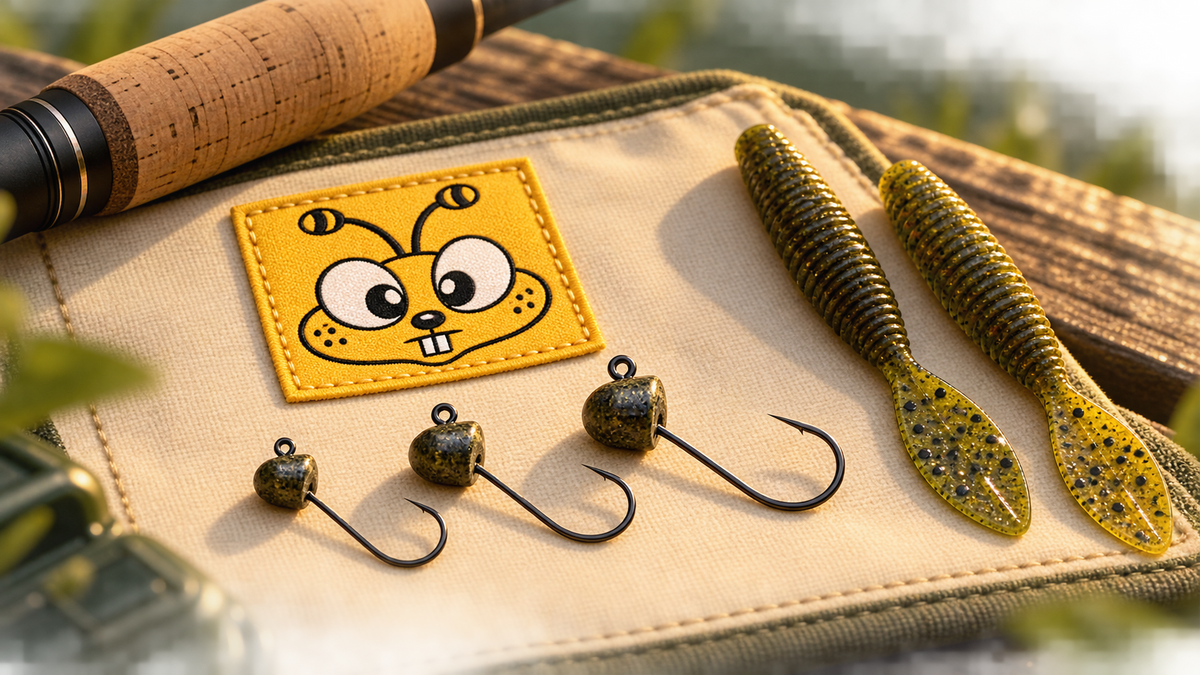

Start with a 1/16-ounce Ned head in calm, shallow water, then add weight when you need more control. A 1/8-ounce head is a useful next step; 3/16 ounce gives you another option for greater depth or stronger moving water. Treat these as starting points, not fixed depth limits.
The smallest number on the packet is not automatically the right choice. Neither is the head that makes the hardest thump on the bottom. You want enough weight to put the bait where you intend, while keeping the small, restrained presentation that makes a Ned rig useful.
Here is a practical way to choose between three common sizes without turning every cast into a weight experiment.
What changes between 1/16, 1/8 and 3/16 ounce?
| Head weight | Try it when | Watch for |
|---|---|---|
| 1/16 oz About 1.8 g |
Water is calm and you can reach the intended area with a light presentation. | Wind bowing the line or current carrying the bait away before it reaches the target. |
| 1/8 oz About 3.5 g |
The lighter head is difficult to manage in wind, current or deeper water. | A quicker drop than you wanted, or more frequent wedging between rocks. |
| 3/16 oz About 5.3 g |
You still need more control after trying 1/8 ounce. | Whether extra weight is helping placement or simply making you drag harder. |
A 1/8-ounce head weighs twice as much as a 1/16-ounce head. A 3/16-ounce head is three times as heavy. Those small-looking fractions represent meaningful steps, but they do not translate into a fixed sinking speed.
The plastic adds weight and water resistance too. Compare heads using the same bait, line and retrieve so you can tell what the weight change actually did.
Use a three-cast check before changing heads
- Choose a visible target. Pick a bottom transition, opening or edge you can cast to repeatedly. Avoid judging the setup from one unusually long cast.
- Watch the line as the bait falls. Notice whether wind is pulling a large bow into it or current is carrying the rig past the intended area.
- Repeat the same presentation. If the lighter head reaches the area and you can manage the retrieve, keep it. If control remains poor, move up one weight and compare.
You do not need to feel the jig hammering bottom throughout every retrieve. A light Ned rig can also be swum or allowed to glide. Choose weight for the presentation you are trying to make, rather than chasing constant bottom contact.
Pair the head with a compact plastic
The Missile Baits Ned Bomb combines a ribbed body with a thin, beaver-shaped tail for subtle movement. It gives you a different profile from a plain stick-style Ned bait without turning the setup into a bulky creature rig.

Rig the body straight and leave the tail free to move. Check the hook’s position against the bait before threading it: head weight and hook size are separate choices. Two heads marked 1/8 ounce can have different hooks, keepers and shapes.
For a simple starting selection, consider Green Pumpkin, then compare the other Ned Bomb color options with the forage and water you fish. Keep the color unchanged while testing head weights; otherwise you are changing two variables at once.
When heavier is not the answer
If the rig keeps wedging into rock, adding weight may make the problem worse. Try a lighter head, a different casting angle or a retrieve that keeps the bait moving above the roughest spots.
If an exposed hook repeatedly collects grass or catches wood, look at hook protection and presentation instead of only the ounce rating. A heavier exposed-hook head does not become weedless.
And if the light setup will not cast comfortably, check your rod’s lure-weight range. The complete rig includes both the head and plastic; the head’s printed weight is only part of that total.
Build a small, useful weight selection
For mostly calm ponds and sheltered banks, 1/16 and 1/8 ounce give you two sensible starting options. Add 3/16 ounce when your usual water gives you a reason to need it. There is no need to buy every available size before making your first cast.
Keep the compartments labeled, use the same plastic when comparing weights, and note which setup gives you the placement and fall you want. For the rest of a compact kit, the beginner bass tackle-box guide covers the broader essentials.