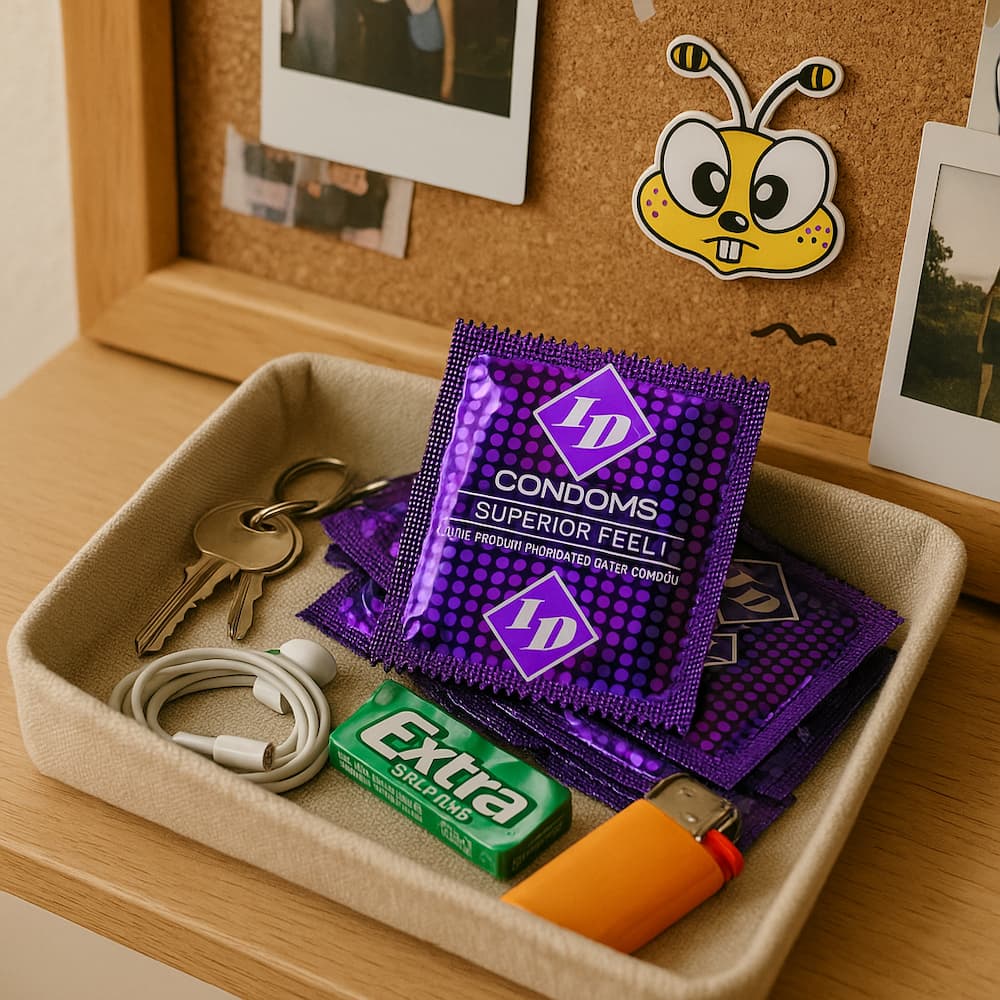
Condoms for Protection, Sensation, and Fit
A condom is the only product that does two jobs at once: it prevents pregnancy and it blocks sexually transmitted infections. No other contraceptive method offers STI protection. No other STI prevention method offers contraception. That dual function is what makes condoms a baseline — not a backup plan, not a compromise, but the single most versatile safer-sex tool available. When used correctly every time, latex condoms are 98 percent effective at preventing pregnancy and are the CDC-recommended barrier method for reducing transmission of HIV, chlamydia, gonorrhea, syphilis, and most other STIs.
The condoms in this collection cover the full range of materials, fits, textures, and specialty features. Whether you are looking for maximum protection, maximum sensation, a solution for a latex allergy, or something that makes oral sex taste better, the right condom exists — it is a matter of knowing what each type does and matching it to what you need.
Materials: What the Condom Is Made Of
Latex is the standard. Made from natural rubber, latex condoms are the most widely available, most affordable, most researched, and most effective condom material on the market. They stretch to accommodate a wide range of sizes, return to shape after stretching, and provide a reliable barrier against both sperm and pathogens. The trade-offs are that some people are allergic to the proteins in natural rubber (estimated at 1 to 6 percent of the population), latex has a distinct smell that some people find distracting, and latex degrades on contact with oil-based lubricants — meaning petroleum jelly, coconut oil, massage oil, and any oil-based product will weaken a latex condom and increase the risk of breakage. Use only water-based or silicone-based lubricants with latex condoms.
Polyisoprene is synthetic rubber that mimics the stretch and feel of latex without containing the proteins that trigger latex allergies. Polyisoprene condoms are soft, elastic, and held to the same FDA testing standards as latex. They are the recommended first alternative for anyone with a latex allergy who still wants a condom that feels and behaves like latex. Like latex, polyisoprene is not compatible with oil-based lubricants.
Polyurethane is a thin, transparent plastic. Polyurethane condoms conduct body heat better than latex (making them feel more natural against skin), have no rubber smell, and are compatible with all lubricant types including oil-based. The downside is that polyurethane does not stretch as well as latex — it is stiffer, fits more loosely, and has a higher breakage and slippage rate. Adding a few drops of water-based lube inside the condom before putting it on reduces internal friction and helps compensate for the reduced elasticity.
Lambskin (natural membrane) condoms are made from lamb intestinal lining. They conduct heat exceptionally well, have no synthetic smell, and produce a sensation closer to unprotected sex than any other condom material. However, lambskin is porous at the microscopic level — the pores are small enough to block sperm but large enough to allow viruses and bacteria through. This means lambskin condoms prevent pregnancy but do not protect against STIs. They are appropriate only for monogamous couples who have been tested and are using condoms solely for contraception.
Fit: The Variable That Matters Most
A condom that does not fit correctly is a condom that does not work correctly. Too tight and it is uncomfortable, reduces sensation, and is more likely to break under tension. Too loose and it slips during sex, bunches at the base, and can come off entirely during withdrawal. The two measurements that determine fit are length and width — and width matters more than length because most condoms are long enough for most penises, but girth varies significantly.
Standard condoms fit a circumference of roughly 4.7 to 5.1 inches (the nominal width listed on the package refers to the flat width of the condom, which is half the circumference — a 52mm nominal width fits a circumference of about 4.1 inches, while a 56mm fits about 4.4 inches). Snug-fit condoms are narrower for thinner penises. Large and XL condoms accommodate girths above 5.1 inches. The only reliable way to find your size is to measure — wrap a flexible tape measure or a strip of paper around the thickest part of the erect shaft, note the circumference, and match it to the manufacturer's sizing chart. Trying two or three sizes is normal and expected. A well-fitted condom should roll on smoothly, sit snugly without squeezing, and stay in place during thrusting without bunching or slipping.
Thickness and Sensation
Standard thickness condoms are typically 0.06 to 0.07mm. They provide a reliable balance between protection and sensation and are the safest choice for anal sex, where friction and force are higher than during vaginal sex.
Ultra-thin condoms reduce the barrier to 0.04 to 0.05mm — thin enough to transmit more body heat and texture while still passing the same burst and tensile strength tests as standard condoms. They are not less safe than standard condoms when used correctly. The difference in sensation is real and noticeable — many people who dislike the "can't feel anything" complaint about condoms find that ultra-thin resolves it.
Extra-thick or "extra-safe" condoms are 0.08 to 0.10mm — built for higher-stress use cases like anal sex or for people who want an additional margin of durability. Some men also choose thicker condoms to slightly reduce sensation and last longer — a physical version of what a delay spray does chemically.
Texture: Ribbed, Dotted, and Studded
Textured condoms have raised features on the outer surface — ribs (horizontal ridges), dots (small raised bumps), or studs (larger raised bumps) — designed to add friction and stimulation for the receiving partner during penetration. The added texture stimulates the nerve endings of the vaginal or anal walls more than a smooth condom does. The effect is subtle rather than dramatic, and many people find that adding extra lubricant alongside a textured condom improves the experience — the texture creates interesting friction, and the lube prevents that friction from becoming irritating during longer sessions.
Flavored Condoms
Flavored condoms are designed specifically for oral sex. They are coated with a flavored lubricant — strawberry, mint, banana, chocolate, and dozens of other options — that makes the taste of latex more pleasant for the giver. Using a condom during oral sex on a penis provides STI protection (herpes, gonorrhea, syphilis, and HPV can all be transmitted through oral contact), and a flavored coating removes the primary objection most people have to putting a condom in their mouth. Flavored condoms are generally not recommended for vaginal or anal sex because the sugars or sweeteners in the flavoring can disrupt vaginal pH and contribute to yeast infections. Use unflavored condoms for penetrative sex and flavored condoms for oral.
Finger Condoms
Finger condoms (also called finger cots) are small latex or nitrile sheaths that fit over a single finger. They serve the same barrier function as a full condom but for manual play — covering hangnails, rough cuticles, small cuts, and sharp nail edges that could scratch or tear delicate vaginal or anal tissue during fingering. They also prevent bacteria from entering cuts on the finger and block pathogen transfer between partners during manual contact. If you are switching between anal and vaginal fingering, changing to a fresh finger condom between areas prevents cross-contamination the same way changing a full condom between orifices would.
Finger cots are thinner and more tactile than full gloves, which makes them the better choice when you want barrier protection on one or two fingers without sacrificing the sensitivity of your entire hand. For full-hand penetration or fisting where all five fingers and the palm need coverage, gloves are the better option. For targeted fingering where you want to feel the texture and warmth of your partner's body through the barrier, finger condoms give you that balance. Use with water-based lubricant for comfort — the same lube rules apply as with standard condoms (no oil-based products with latex finger cots).
Dental Dams
Dental dams are thin, flat sheets of latex or polyurethane — roughly six inches square — placed over the vulva or anus during oral sex. They create a barrier between the mouth and the genitals or anus that blocks the transmission of herpes, gonorrhea, syphilis, HPV, and other infections that can spread through oral-genital and oral-anal contact. Dental dams are the barrier method for cunnilingus and rimming — the oral sex equivalents of what a condom does for fellatio and penetration.
Usage is straightforward: remove the dam from its package, place it flat over the vulva or anus (do not stretch it — it should lay flat with light contact), hold it in place with your hands or your partner's hands, and perform oral through the barrier. Use one side only — do not flip it. Use a new dam if you switch between vaginal and anal oral contact. A drop of water-based lubricant on the receiving partner's side (between the dam and the skin) improves sensation by reducing the dry-sheet feeling and increasing the transmission of tongue pressure and warmth through the material. Flavored dental dams are available and work the same way as flavored condoms — they make the barrier more pleasant for the giver without compromising the protection for either partner.
Dental dams are significantly underused — studies show fewer than 10 percent of sexually active adults have ever used one, despite oral-to-genital STI transmission being well documented. They are particularly valuable for lesbian and bisexual women, for anyone engaging in rimming (oral-anal contact), and for any new or non-monogamous sexual partnership where STI status is not fully known. If you do not have a dental dam available, an unlubricated condom cut lengthwise and opened flat can serve as an improvised alternative — though a purpose-made dam provides a larger, more comfortable surface area.
Storage and Expiration
Condoms have a shelf life of three to five years depending on the material and whether they include spermicide (spermicidal condoms expire faster). The expiration date is printed on every individual wrapper. An expired condom has degraded elasticity and is more likely to break — always check the date before use. Store condoms in a cool, dry place away from direct sunlight and heat. A bedside drawer is fine. A wallet, a car glove compartment, or a back pocket is not — body heat and friction degrade the material over time even before the expiration date. If the wrapper feels brittle, sticky, or damaged, discard the condom and use a fresh one.