Hobbies & Collectibles / News, Launches & Updates
October Meteors: An Evening Out or a Start Before Dawn?
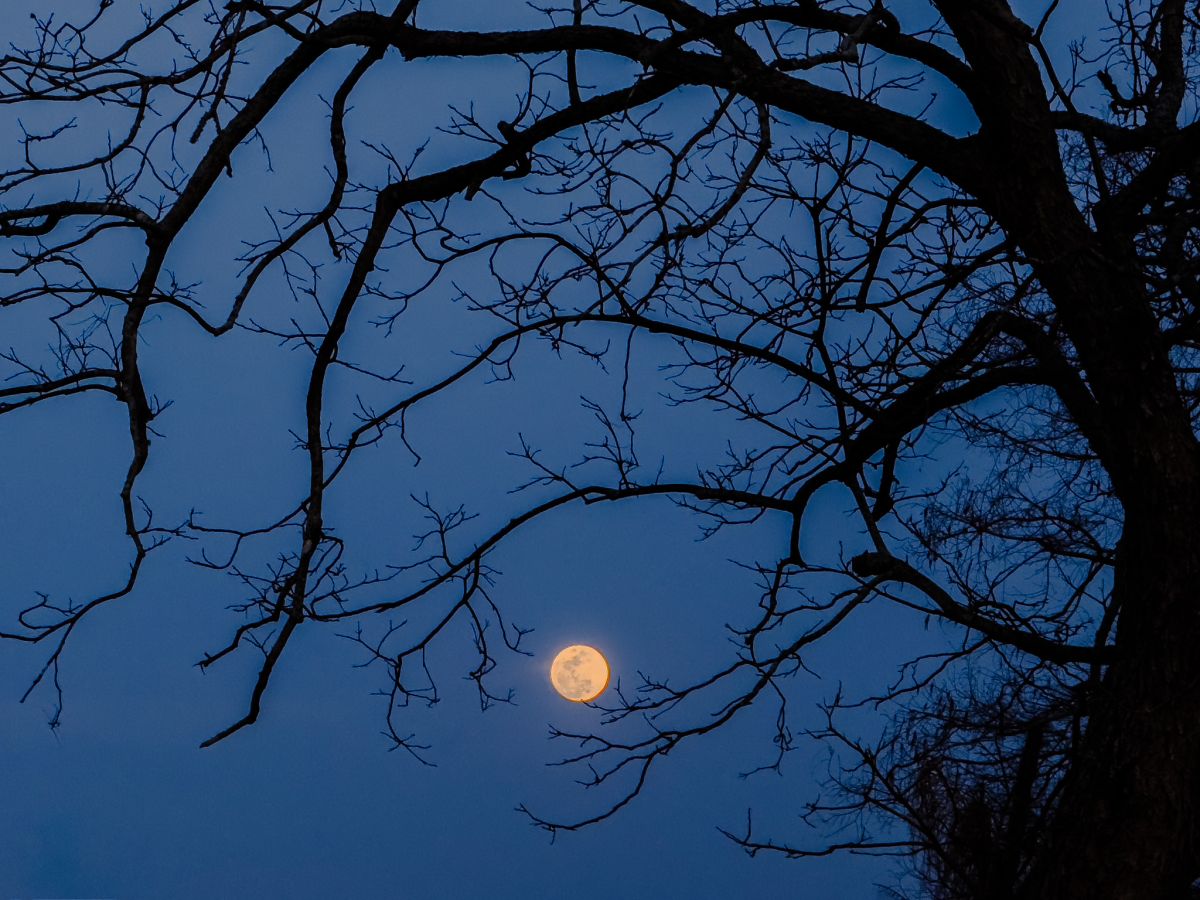
An evening outside or an alarm before dawn? October offers both kinds of meteor-watching plans. The Draconids arrive first, on October 8; the Orionids follow later in the month. Choose the outing that fits your household, then let the weather have the final say.
Cover: a full Moon framed by pecan branches near New Orleans, March 13, 2025. Photo: NASA/Eric Bordelon.
October 8: make an evening of the Draconids
NASA places the Draconid peak on the evening of October 8 into October 9, with a nearly new Moon leaving little moonlight to compete with. This is the easier choice if a predawn start would keep you at home.
Think of it as a quiet skywatch rather than a guaranteed spectacle: NASA describes a modest shower, with only a few meteors per hour. Find a dark spot, let your eyes adjust and watch a broad stretch of sky. The name comes from Draco, the constellation containing the shower’s apparent point of origin; you needn’t stare at that one spot. NASA’s Draconid viewing notes.
October 21–22: save the Orionids for before dawn
The Orionids peak overnight from October 21 into October 22. These streaks come from debris left by Halley’s Comet. This year’s bright waxing gibbous Moon makes the timing more important: NASA recommends the hours before dawn after moonset, when the sky is darker.
Check moonset and the start of dawn for your location before setting an alarm. A date on the calendar is only half the plan; your useful window is the darkness between those two local times. Meteors can appear across the sky, despite seeming to radiate from Orion. NASA’s October skywatching guide.
Turn a forecast into an outing
- Pick one window. Put October 8 evening or October 22 before dawn on your calendar, with a weather check earlier that day.
- Choose the place first. Look for an open view away from bright lights, somewhere you can comfortably and legally remain after dark. Check park closing times before travelling.
- Make a small observing note. Record your start and finish, cloud cover and any meteors you spot. If you try again, those details make the comparison more useful than a count alone.
Our pick for a first outing is the Draconid evening: an easier hour makes it simpler to gather a friend or family member and actually go. Keep the Orionid morning as a second date if the first evening leaves you wanting another look.