Fashion / Guides & How-To’s
95% Cotton, 5% Spandex: What Does It Mean? Is It Good for T-Shirts and Leggings?
What does 95% cotton, 5% spandex actually mean? Learn how the blend affects stretch, softness, fit, shrinkage and care, and why it is so common in fitted T-shirts and cotton leggings.
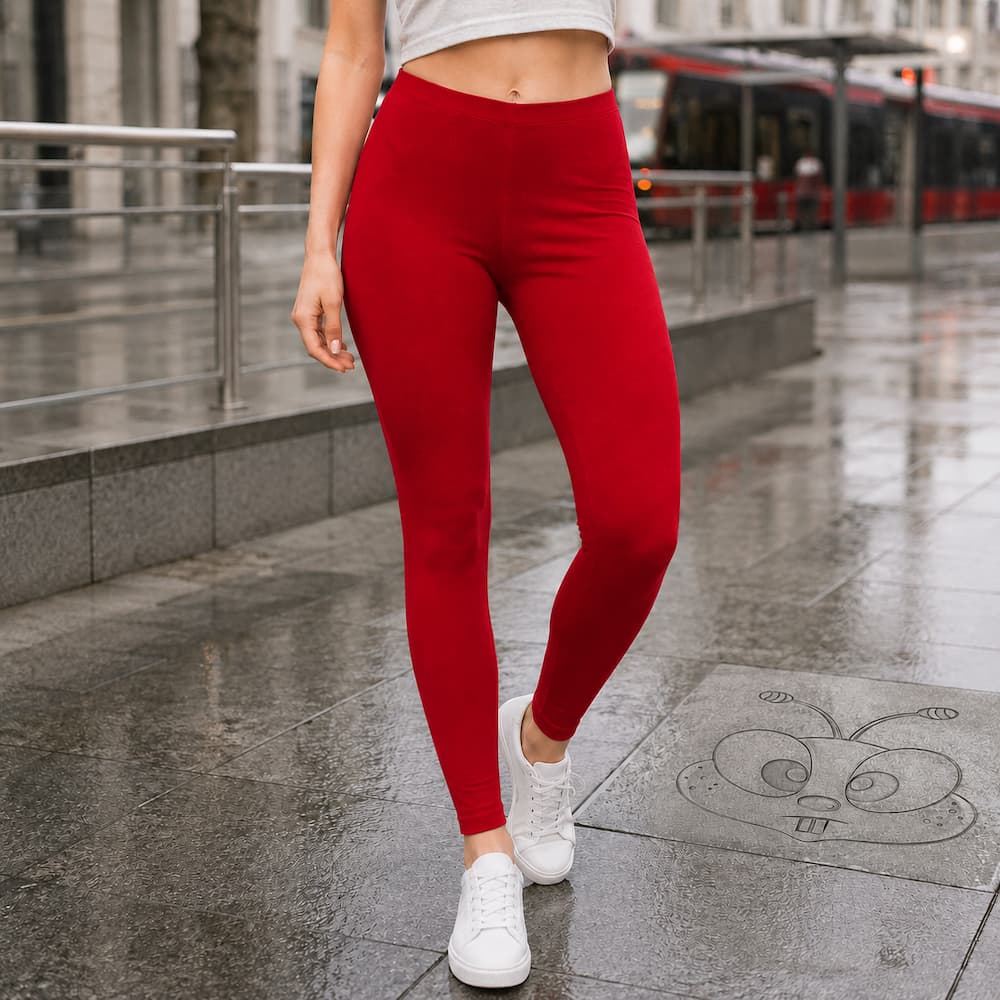

95% cotton, 5% spandex is a cotton-rich fabric with added stretch. Cotton provides most of the fabric’s feel and absorbency; spandex helps it stretch and return toward its original shape. It is a useful blend for fitted T-shirts, leggings and everyday layers that need to move with you.
The percentages describe fiber content by weight. 5% spandex does not mean a garment stretches only 5%. The knit, fabric weight and cut all affect how much give it has.
Looking for care advice? Jump to shrinkage, washing or drying.

How does cotton-spandex fabric feel?
A cotton-rich stretch jersey can have the familiar feel of a cotton tee with more give when you reach, sit or bend. That makes it convenient for close-fitting layers under sweaters or jackets. It does not automatically feel like compression clothing.
Two garments with the same 95/5 label can still feel quite different. A lightweight T-shirt and a denser pair of leggings use the blend for different fits. Fiber content alone cannot tell you whether something is thick, opaque, brushed or particularly soft.
95% cotton, 5% spandex vs. 100% cotton
The main difference is added elasticity. A cotton-spandex blend can follow a closer fit while allowing movement. A 100% cotton knit can also stretch because of its construction, but it has no added spandex to help it recover.
Choose a cotton-spandex tee when you want a fitted layer with some give. Choose a relaxed 100% cotton tee when you prefer that cut and fabric feel. The right size still matters: stretch should make a garment comfortable, not compensate for a fit that pulls at the seams.
Is it a good blend for T-shirts?
Yes, especially for fitted basics. The Zenana Basic Crew Neck T-Shirt uses 95% cotton and 5% spandex. Its stretch jersey works as an everyday tee or a layer beneath a cardigan.
The Zenana Cotton V-Neck Short Sleeve Tee uses the same base blend, with select colors made from 60% cotton, 35% polyester and 5% spandex. Check the fabric details for the color you choose. If the neckline is your main decision, see our crew-neck vs. V-neck comparison.
Is 95% cotton, 5% spandex good for leggings?
It is a practical option for everyday leggings when you prefer a cotton-rich feel. The spandex lets the fabric move through sitting, walking and bending, while the cut and fabric weight determine how the finished leggings fit.

Zenana Premium Cotton Full Length Leggings and Cotton Capri Leggings use 95% cotton and 5% spandex in most colors. Some color blends differ, so check the selected option.
Do not use the 95/5 label as a promise of opacity or workout performance. Check the fit in the lighting and movements you plan to wear them in. Fabric stretched too tightly can become more revealing, even when it looks opaque lying flat.
Cotton-spandex vs. polyester-spandex
Start with the feel and use you want. Cotton-rich leggings offer a different fabric character from synthetic microfiber styles. The Zenana Premium Microfiber Full Length Leggings, for example, use 90% polyester and 10% spandex.
A higher spandex percentage does not automatically make a garment twice as stretchy or better fitting. Compare the fabric description, cut and intended use. For exercise, look for specific moisture-management and performance features rather than assuming either fiber blend guarantees them.
Does 95% cotton, 5% spandex shrink?
It can. Adding spandex does not make cotton shrink-proof, and the amount of change depends on the fabric’s construction, finishing and care. Heat and tumble drying can affect the garment’s size or shape; excessive heat can also damage the stretch fiber.
There is no dependable shrinkage percentage for every 95/5 garment. Follow its care label, and avoid using a hot wash or dryer to deliberately make an oversized item smaller. The result may be uneven and can affect the fit you wanted to preserve.
How to wash cotton-spandex clothing
- Read the garment label. Its instructions take priority over general advice about the blend.
- Sort by color and care needs. Keep new dark colors separate from light items, and avoid washing delicate stretch basics with rough or heavily fastened clothing.
- Use cold water and a gentle cycle if the label permits. Measure detergent according to the load and product directions.
- Avoid chlorine bleach. It can damage spandex. Check both the garment and cleaning-product instructions before treating stains.
- Remove promptly and reshape gently. Do not wring or pull the fabric to change its size.
Can cotton-spandex go in the dryer?
Only if the garment’s care label allows it. Use the permitted setting and avoid overdrying. If the label calls for line drying or drying flat, follow that instruction instead of substituting a tumble cycle.
Support damp garments so their own weight does not pull them out of shape. Do not assume low heat eliminates all shrinkage; the finished garment and drying action both matter.
Are spandex and elastane the same?
Yes. Spandex and elastane are names for the same type of stretch fiber. A label reading “95% cotton, 5% elastane” describes the same fiber proportions as “95% cotton, 5% spandex.”
When choosing your next tee or pair of leggings, use the blend as a starting point. Then check the size, color-specific composition, fabric weight and care instructions—the details that determine whether the garment suits your day.