Hobbies & Collectibles / Guides & How-To’s
How to Brush Varnish onto Miniatures Without Overworking It
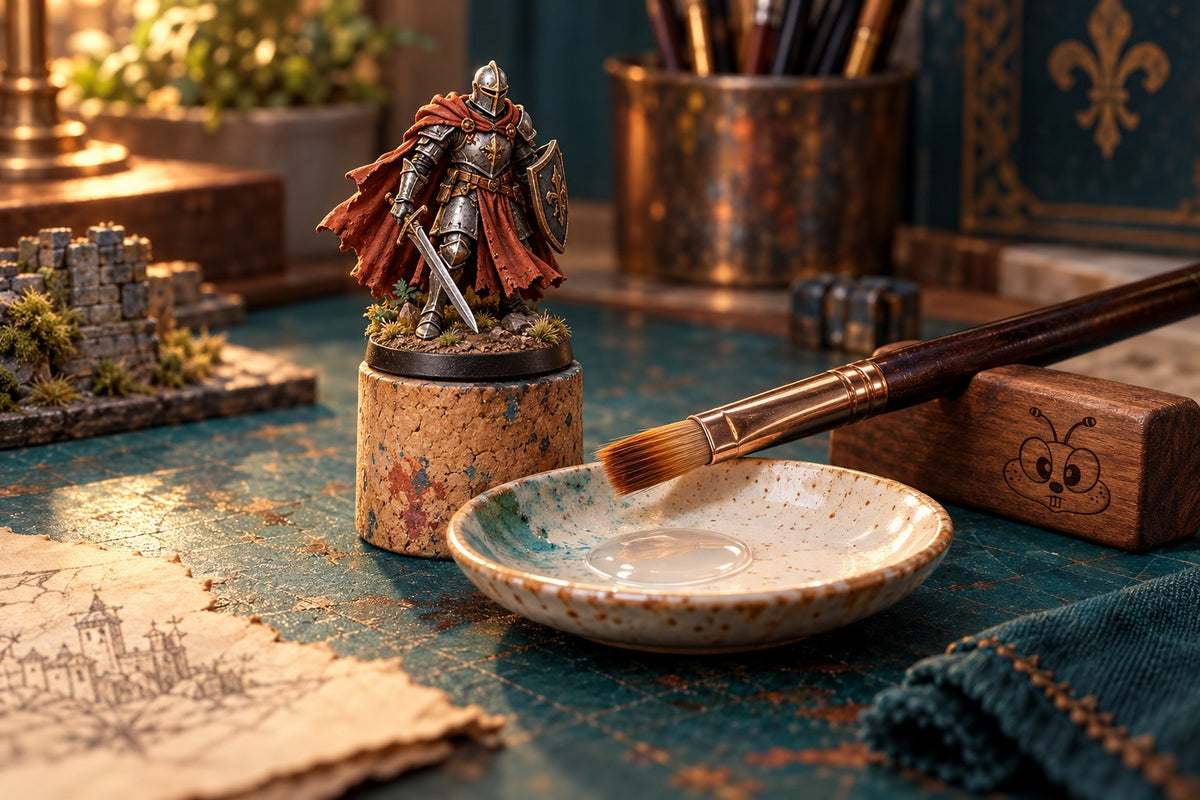
The hobby workbench · Finishing by hand
You do not need an airbrush to varnish a miniature. Use a varnish made for brush application, spread a light, even layer over fully dried paint, and stop working an area as soon as it starts to set. The aim is a continuous film—not a wet coat sitting in every fold.
Spread
Work one small surface at a time with a soft brush and a modest load.
Check
Turn the model toward the light. Look for missed edges and liquid collecting in recesses.
Stop
Once the varnish starts dragging, leave it alone. Judge the finish after it dries.
Before you begin
Choose a varnish you can brush
AK Interactive 3G Acrylic Varnish comes in Matt, Satin and Gloss finishes in 100ml bottles, with brush application available across the range. Choose the sheen you want on the finished surface: matt for subdued reflections, satin for a gentle sheen, or gloss for a deliberately shiny detail.
Think about the miniature in sections. A cloak and a wet-looking gem do not need the same final finish. A brush gives you the control to treat them separately. Start with one finish for most of the model; add another only when you have a specific surface in mind.
For a broader look at finishes and spray options, see the model kit topcoat guide.
Set up a small finishing station
Gather your varnish, a clean palette, a soft brush, a painting handle and a spare painted piece. Use a brush that covers the surface comfortably: a small flat brush suits a broad cloak or vehicle panel, while a pointed brush can reach around equipment. A tiny detail brush makes a large surface needlessly slow to cover.
Keep a separate brush for clear coats if you can. Dried color caught near the ferrule is an unwelcome addition to a transparent finish. If you are still choosing painting brushes, the miniature brush-size guide explains why the number alone does not tell you everything.
Let the paint layers dry fully according to their instructions, and remove loose dust before you begin. Hold the base or handle rather than the painted surfaces. Try your varnish on the spare piece with the same paint underneath; include a dark patch and a metallic patch if your model uses both. That shows you the finish before it reaches your favorite miniature.
How to brush on the clear coat
Prepare a little varnish at a time. Mix it as directed on the bottle, then dispense a small amount onto a clean palette. Follow the instructions for brushing rather than copying an airbrush dilution ratio. A thin coat describes the layer you leave on the model; it does not automatically mean adding lots of thinner.
Load the brush without flooding it. Take up enough varnish for a smooth stroke, then remove an obvious excess on the palette. Start on an accessible surface so you can feel how the varnish spreads. Use light pressure rather than scrubbing the bristles into the paint.
Work around natural boundaries. Finish a cloak panel, shield face or piece of armor while that area is still wet, then move on. Use those edges as stopping points instead of repeatedly crossing a large, partly drying surface. Keep the layer even and let the detail remain visible.
Check the low points immediately. Tilt the miniature under a lamp. If fresh varnish has gathered beneath an arm, around a boot or at the bottom of a cloak fold, lift the excess with a clean brush before it begins to set. You want coverage in the recess, not a reservoir.
Leave a setting surface alone. If the brush begins to drag, stop. Chasing a tiny mark through tacky varnish can disturb the layer you have just applied. Let it dry before deciding whether another light application is needed. Follow the bottle's drying guidance, and allow the finished coat to cure before packing the miniature for a game.

Choose your finish
AK 3G Acrylic Varnish
A 100ml bottle for hand-finishing miniatures and scale models. Choose the finish for the surfaces you are working on; you do not need all three to get started.
The next-step board
Before you add more varnish
A fresh puddle in a fold
Lift the excess while it is still wet. Reduce the brush load for the next section.
Brush marks as it sets
Stop brushing and let it dry. On the spare piece, try a softer brush, lighter pressure and a smaller working area.
Uneven sheen after drying
Check for missed areas and confirm the varnish was mixed as instructed. Try the correction on the spare piece before recoating the model.
Cloudiness that remains
Let the coat dry fully before judging it. Do not stack more coats or try a solvent remedy on the miniature; investigate on a spare piece first.
Keep your first experiment small. Change one thing—brush load, working area or pressure—so you can tell whether it helps. A quick note beside the spare piece is more useful than guessing again on the next model.
Common brush-on varnish questions
Should I thin varnish for a brush?
Use the instructions for the exact varnish. Brush and airbrush directions can differ, and a thinning ratio for one brand is not a rule for another. Begin with the recommended brushing preparation and assess it on a spare painted piece.
Can I use matt everywhere, then gloss a few details?
That is a practical way to plan contrasting finishes. Let the first layer dry as directed, then apply gloss selectively to the areas where you want shine. Check the combined finish on your spare piece before using it on the model.
How many coats does a miniature need?
There is no useful universal coat count. Follow the varnish instructions and inspect the dried coverage. Avoid adding another coat simply because the first one looks shiny while wet.
Is a tiny brush better for avoiding marks?
Not necessarily. Pick a soft brush that fits the area and lets you cover it without dozens of overlapping strokes. Save the small pointed brush for confined spaces and selective details.
Finish one piece before the whole squad
Choose your sheen, prepare a spare painted piece and practice the short sequence: spread, check, stop. Once you like the dried result, use that same setup on the first miniature before moving through the rest.