Hobbies & Collectibles / News, Launches & Updates
Mars and Jupiter: Two Planets, Three Morning Sketches
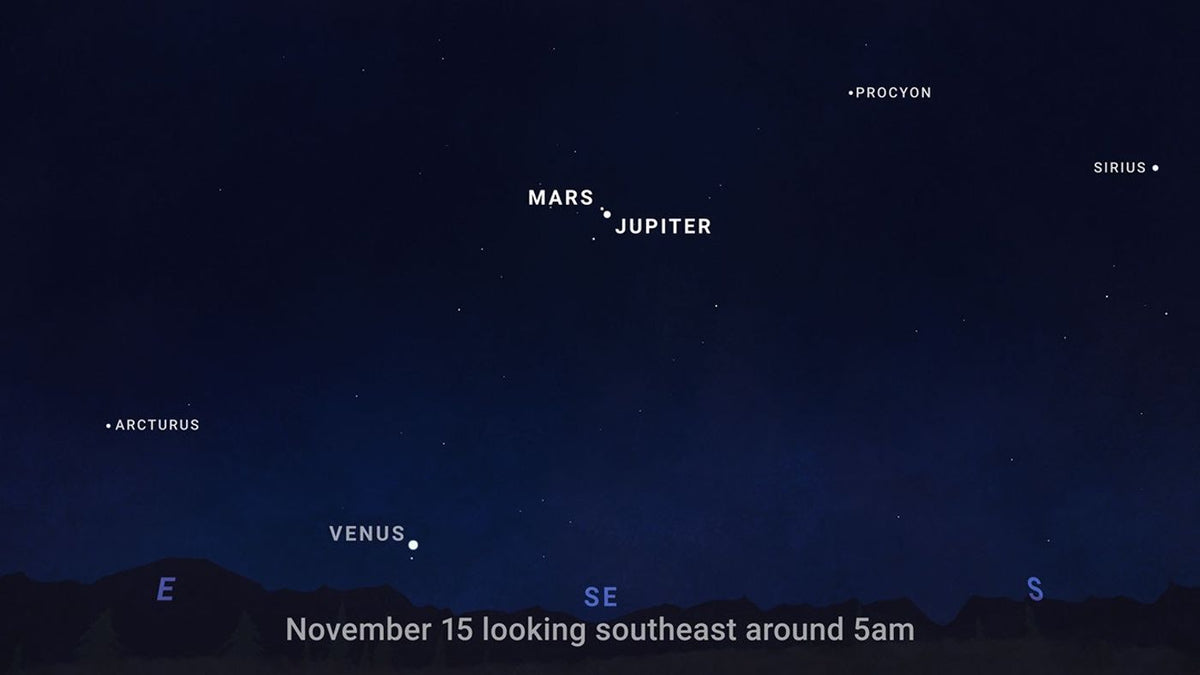
Give yourself a tiny drawing project before breakfast: two dots, a horizon line and the date. The close pairing of Mars and Jupiter on November 15 and 16, 2026 has passed, but this three-morning sketch project works for future planet pairings, too. NASA’s chart records that November view.
Chart: NASA/JPL-Caltech. This archive chart illustrates November 15, 2026, around 5 a.m.; it is not a current locator chart.
Make a little morning record
For your next outing, use a current skywatching guide to choose visible planets and confirm where and when to look. Check your local sunrise time and cloud forecast the evening before. Choose a clear view in the right direction and a time while the sky is still dark.
Try three morning sketches on separate pieces of paper. Use the same viewing spot and roughly the same time before sunrise, and label each sketch with its date and time. Add a roofline or tree silhouette as a reminder of where you stood. Leave space beside each drawing for a note about clouds or anything that made the view easier to recognize.
Keep the drawings simple enough to compare: two dots, labels and a familiar landmark. This is an observation diary; it does not need to look like a star atlas.
Watch the gap change
NASA’s guide placed Mars and Jupiter about 1.2 degrees apart on November 15–16, a little more than two full Moons side by side. For a future pairing, compare your drawings over several mornings and look for changes in apparent separation. Planets that look close together in our sky can remain far apart in space.
Clouded out? Keep the next morning on your calendar. Noticing a change across several mornings can be more satisfying than chasing one perfect picture.
Source and archive chart: NASA’s November skywatching guide.