Home & Kitchen / News, Launches & Updates
Does Your Houseplant Need a Grow Light? Check Two Winter Spots
Use two spots and three quick observations to find a brighter winter home for your houseplant before buying a grow light.
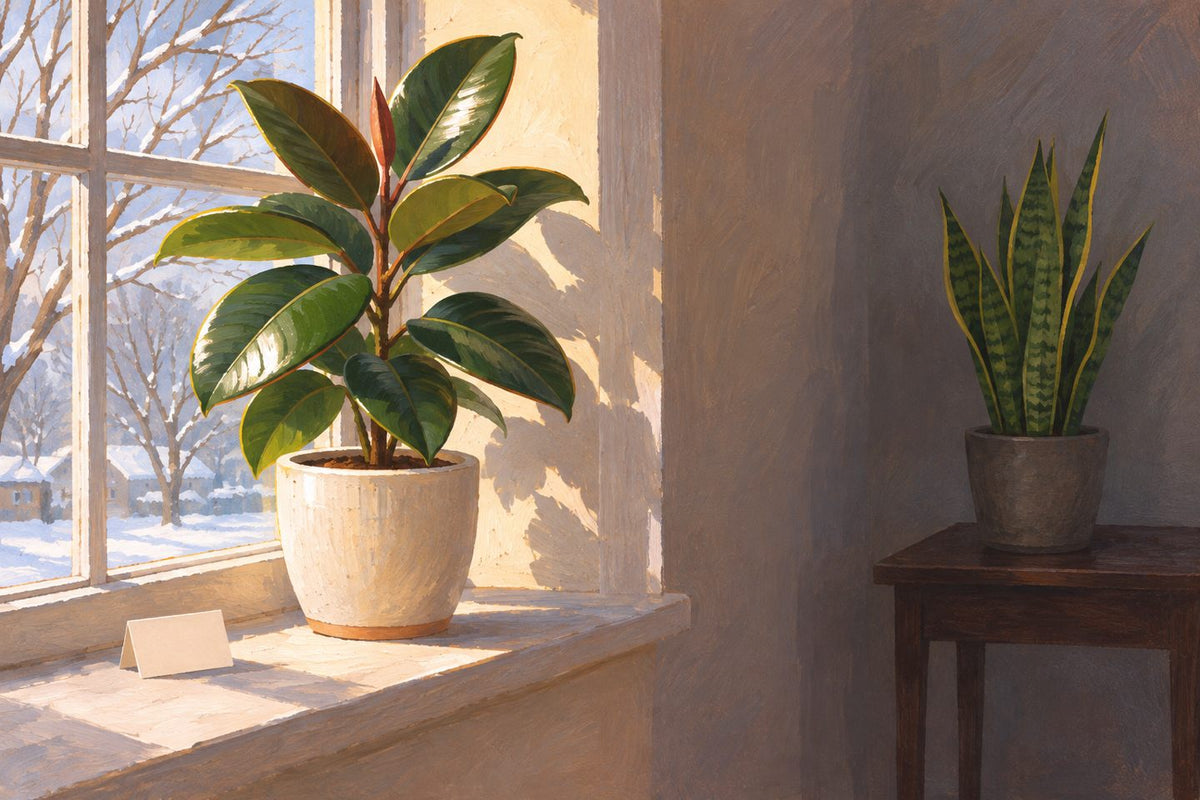
A window can look bright from the couch while the shelf beside it stays in shade. Before you buy a grow light, compare your plant’s current spot with one other place you could keep it. All you need is a note card and a day when you’ll be home.
Cover illustration by Happibee.
Check from the plant’s point of view
Look at both spots in the morning, around midday and again in the afternoon. Make your notes at leaf height. Does a beam of sun reach that spot? Is there bright light without direct sun, or does the spot stay shaded? Write down anything that cuts off the light, such as a deep overhang, a neighboring building or a curtain you tend to close. The three snapshots give you a way to compare the spots. For a closer look at how long direct sun lasts, note when a beam arrives and when it moves on.
Give the brighter spot to the plant that needs it
Start with the name on the plant tag. The University of Minnesota Extension’s indoor lighting guide lists snake plants among plants suited to lower light and rubber plants among those suited to medium light. If your window spot is brighter without being drafty or exposed to harsh direct sun, try the rubber plant there. The snake plant can take the less bright spot, provided it still gets daylight.
Decide whether you need a lamp
If both spots stay dim and the plant needs more light, consider a grow lamp. If one spot gives you an improvement, try it and watch the next growth. Longer gaps between new leaves or stems reaching toward the window can point to too little light. Check the potting mix before watering after a move. For more on light, humidity and watering, see the Extension’s winter houseplant tips.