Fashion / Guides & How-To’s
What to Wear Under Sweaters: Choose a Layer That Sits Comfortably
The Fitting Room / The layer underneath
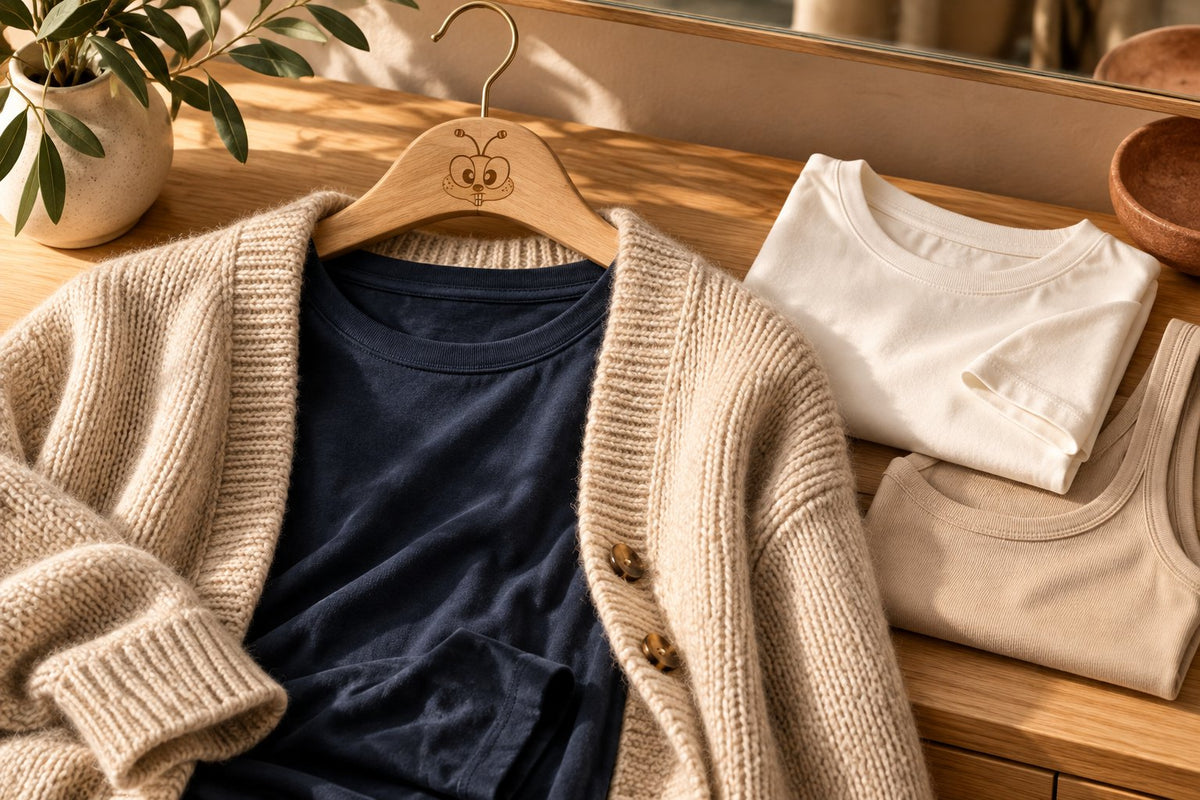
Wear a tank under a sweater when you want coverage through the body without another sleeve. Choose a short-sleeve tee for shoulder and upper-arm coverage, or a long-sleeve tee when you want fabric between your arms and the knit. The best choice leaves enough room to bend your elbows and sit comfortably.
A favorite sweater can feel quite different depending on the shirt underneath it. The wrong sleeve can bunch at your elbow; a long hem can collect at your waistband. Start with the sweater you already want to wear, then choose the smallest change that solves the problem.
Tank, T-shirt or long sleeve?
Lay your sweater beside the shirt before trying them on. Compare the armholes, sleeve width and length through the body. A roomy sweater can accommodate a relaxed tee more easily than a narrow, fine-knit style. A tank removes sleeve bulk altogether, but leaves your arms exposed to the sweater.
Coverage: mainly the torso.
Start here: an open cardigan, a close-fitting sweater sleeve, or a room where you tend to feel warm.
Coverage: torso, shoulders and upper arms.
Start here: an everyday pullover when you want a tee you can also wear on its own.
Coverage: torso and arms down toward the wrists.
Start here: a textured knit that you would rather not feel directly against your forearms.
For a scratchy sweater, match the layer to the actual contact point. A tank will not cover scratchy sleeves. A crew-neck tee will not cover the whole neck beneath a tall turtleneck. If the combination still feels uncomfortable, choose a different sweater rather than adding layers indefinitely.
Three useful starting points
Affordable shirts to wear under sweaters
These Zenana basics give you three different sleeve options. Start with one that suits your sweater and your usual fit; there is no need to buy all three.
Black/Small prices and availability checked October 20, 2026. Prices below are for the item, excluding shipping and any applicable tax. Other sizes and colors can differ.

For less fabric in the sleeves
Zenana Scoop Neck Cotton Tank · Black/Small $4.99
The wide-strap, scoop-neck shape is a useful starting point beneath an open cardigan. It also lets you add a layer through the body without squeezing another sleeve into a fitted sweater.
Check the armhole and neckline with your own bra. Whether straps stay covered depends on how the two garments sit together.
Choose the scoop-neck tank →
For an easy sweater-off option
Zenana Basic Crew Neck T-Shirt · Black/Small $6.95
A plain short-sleeve tee is a practical choice for a day that moves between outdoors and a heated room. You can take off the sweater and still have an everyday top underneath.
Before choosing this cut for a thin sweater, check whether the short-sleeve edge makes a visible ridge on your upper arm. That is a reason to change the pairing, not automatically size down.
Choose the short-sleeve tee →
For coverage beneath textured sleeves
Zenana Cotton Long Sleeve Crew Neck T-Shirt · Black/Small $6.95
Choose a long sleeve when arm coverage is the missing piece. The relaxed cut needs room underneath the sweater, especially at the upper arms and elbows.
Try the tee by itself first, then add your knit. If the sleeves twist or gather, a roomier outer layer may work better. A smaller tee is only useful if it still fits comfortably on its own.
Choose the long-sleeve tee →For more low-price wardrobe options, see the clothing and accessories under $10 guide. Check your selected size and color before adding a top to your cart.
Try the whole outfit
The sit-and-reach layer check
A shirt can look smooth while you stand still and bunch as soon as you sit down. Try it with the actual sweater, bra and waistband you plan to wear. You are looking for a combination that settles back into place without repeated tugging.
Three movements, three useful clues
- Reach forward. Bring both arms forward as though reaching across a table. Notice pulling across the back and fabric gathering under the arms.
- Bend your elbows. Check whether either sleeve feels tight or collects into a thick fold at the bend.
- Sit, then stand. Look at the waist and hem. A lump that returns each time may mean the inner top is too long or too loose for that pairing.
Make one adjustment at a time. Smooth the sleeve, change the tuck, or try the sweater with another top. This makes it easier to tell which garment is causing the problem before buying a replacement.
When the layers will not sit right
The shirt bunches at the waist
Try leaving it untucked if you like a visible hem. If you want the hem hidden, spread the fabric evenly around the waistband instead of pushing it all into the front. When that still feels bulky, try a shorter or less roomy top. Avoid folding a long hem several times underneath the sweater.
The collar shows more than you want
Decide whether you want the layer visible. A contrasting tee collar can be part of the outfit. For a hidden layer, compare the actual neckline openings together; the words “crew,” “V” or “scoop” alone do not guarantee that one sits below the other. The crew-neck and V-neck guide explains those shapes in more detail.
The underlayer shows through a pale knit
Try the outfit in daylight before choosing a color. Compare a top close to your skin tone with one close to the sweater’s color and decide which effect you prefer. White is not automatically invisible under every pale sweater. For an open-knit design, treat the visible top as part of the outfit.
You feel too warm inside
Choose an underlayer you are happy to wear by itself so removing the sweater is easy. A tank may suit an open cardigan; a short-sleeve tee may be more useful for a workday or a holiday visit. If your arms need coverage, try a lighter outer knit instead of forcing a sleeveless solution.
Before you choose your layer
Should a shirt under a sweater be tight?
It should fit comfortably with room for movement. A close fit can reduce spare fabric, but pulling across the chest or digging at the armholes is not a useful trade. Judge the shirt alone and then with the sweater.
Can I use a regular cotton tee?
Yes, if its cut and thickness fit comfortably beneath your sweater. Start with a tee you already own. Check the sleeves, hem and neckline before deciding you need a dedicated underlayer.
Do I need a thermal shirt for everyday layering?
Choose according to the activity and conditions. A basic tee can serve as an everyday indoor layer; that does not make it a technical cold-weather base layer. For extended outdoor use, choose clothing designed for the conditions.
Which one should I buy first?
Choose for the sweater you reach for most. Start with the tank if sleeve bulk is the problem, the short-sleeve tee if you want an easy standalone top, or the long sleeve if you want coverage along your arms.