


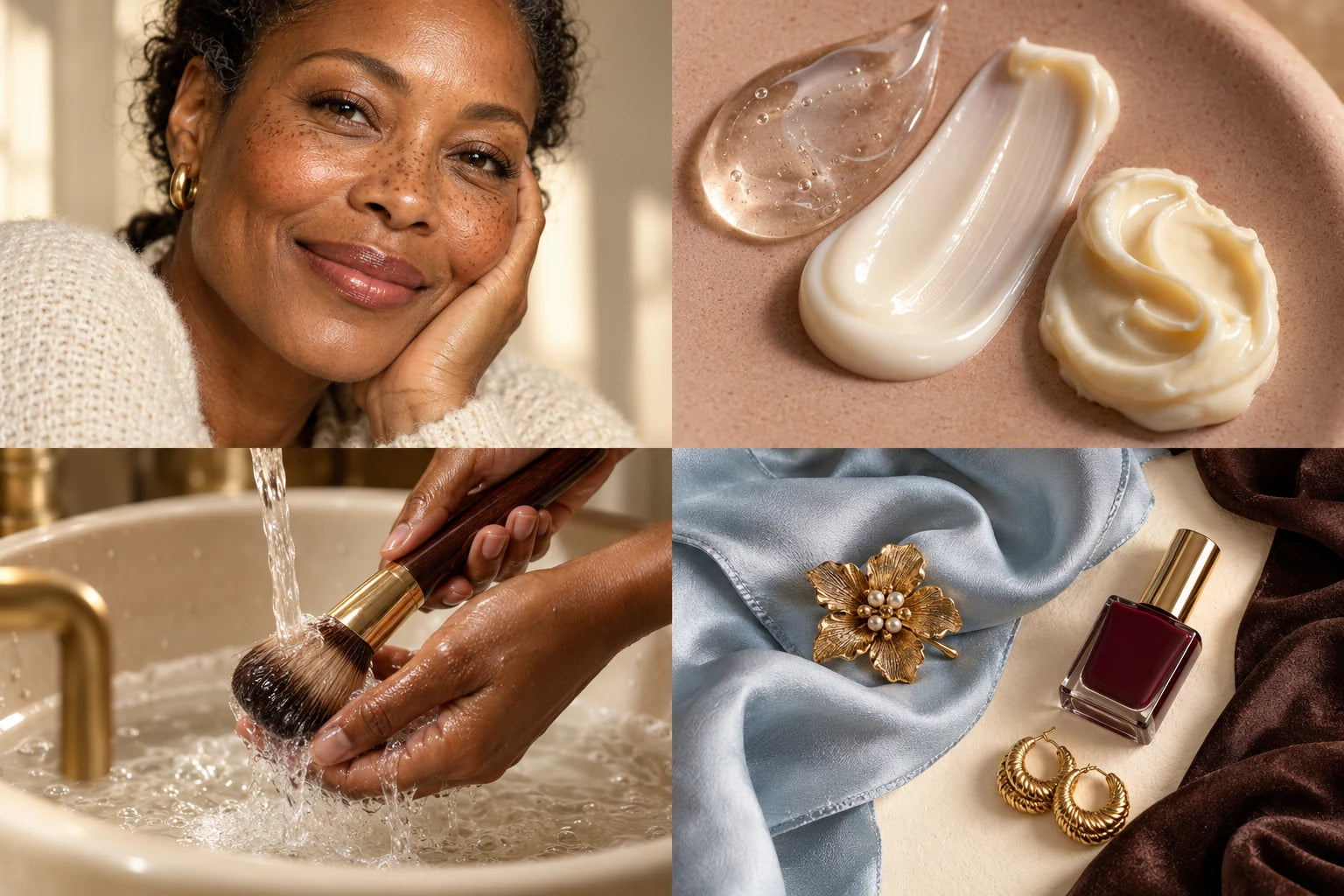
Lotion is generally lighter than cream. Body butter is a product description, not a guarantee of a particular formula. For dry skin, the AAD recommends a fragrance-free cream or ointment; judge any individual product by its ingredients and directions.
The name is a starting point
Lotion usually spreads easily and feels lighter. Cream tends to be thicker. Products called body butter often feel rich, but the label alone does not tell you how a formula will behave on your skin.
Before buying, compare the actual ingredient list, fragrance information, directions and package size. A beautiful texture photograph cannot tell you how a formula performs.
When dryness is the problem
The American Academy of Dermatology advises choosing fragrance-free products and applying moisturizer after washing while skin is still damp. Creams and ointments can be more helpful than lotions for dry skin.
If a product stings, causes a rash, or your dryness persists, stop experimenting and seek individual advice. More scent, more steps and a higher price are not reliable signs that a product is right for you.